

Quick answer: the internet was born as ARPANET in the late 1960s, the World Wide Web arrived in 1989, and today more than 6 billion people are online. In between, an email symbol, a $125 million buyout and one very early online transaction shaped the digital world we now build websites for.
Fact #1: The internet has two "inventors"
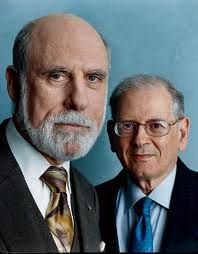
Computer scientists Vinton Cerf and Bob Kahn are credited as the inventors of the internet. In the late 1960s, they helped create ARPANET (the Advanced Research Projects Agency Network), a project funded by the U.S. Department of Defense to connect research computers across the country. ARPANET's networking protocols became the technical foundation everything online still runs on.
Fact #2: The web and the internet aren't the same thing
The World Wide Web — the pages and links you actually browse — was created separately, twenty years after ARPANET. British scientist Tim Berners-Lee built it in 1989 while working at CERN, as a way for researchers to share documents over the internet that already existed.

Fact #3: The @ symbol in your email address is 50+ years old
The first networked email system was built by Ray Tomlinson in 1971 as part of the ARPANET project. He picked the "@" symbol to separate a person's name from the address of the computer they used — a format that has survived unchanged into every inbox today.
Fact #4: More than half your inbox is spam
Statista's research puts spam at roughly 60% of all global email traffic. Filtering that out reliably is one of the reasons email marketing still needs proper authentication (SPF, DKIM, DMARC) to land in the inbox instead of the spam folder.

Fact #5: There are close to 2 billion websites — and rising
Estimates put the number of websites live today at close to 1.9 billion, though only a fraction are actively maintained. New domains are registered every second, which is exactly why keeping a site technically healthy and well-optimized matters more than ever for visibility.

Fact #6: A staggering amount happens online every second
In any given second, thousands of posts, searches and messages are created across the world's social platforms and search engines. Sites like Internet Live Stats track these numbers in real time, and watching the counters climb is a good reminder of just how much content competes for attention online.

Fact #7: Online shopping started with a CD in 1994
NetMarket is widely credited with the first secure ecommerce transaction, selling a CD online on August 11, 1994. It took another two decades for online shopping to become mainstream, but that single encrypted transaction proved the model could work.

Fact #8: Mobile internet is older than you'd think
The first phone with internet access was the Nokia 9000 Communicator, launched in Finland in 1996 — more than a decade before smartphones became the norm. It's a reminder that "mobile-first" isn't a new idea; the industry has just gotten far better at it.

Fact #9: The internet has passed 6 billion users
Internet adoption has kept climbing since the 4.57 billion users recorded in 2020. As of 2026, more than 6.1 billion people are online worldwide — about 74% of the global population — with Asia accounting for close to 58-59% of that total, according to DataReportal's Digital 2026 report.

Fact #10: The first social network sold for $125 million in 1999
Six Degrees, founded by Andrew Weinreich, launched in 1997 as the first recognizable social media platform — letting users create a profile and connect with friends. It was bought by YouthStream Media Networks for $125 million in 1999 and shut down in 2001, years before Facebook or LinkedIn existed.

Make Some Digital History of Your Own
The web has come a long way since the first grey-background homepage — and so have user expectations. If your website still feels like a piece of digital history itself, our web design and development team can bring it up to 2026 standards. Read about the web design trends shaping Canadian websites, or see what we've built in our portfolio.
Get a free website assessment — find out where your site stands today.


